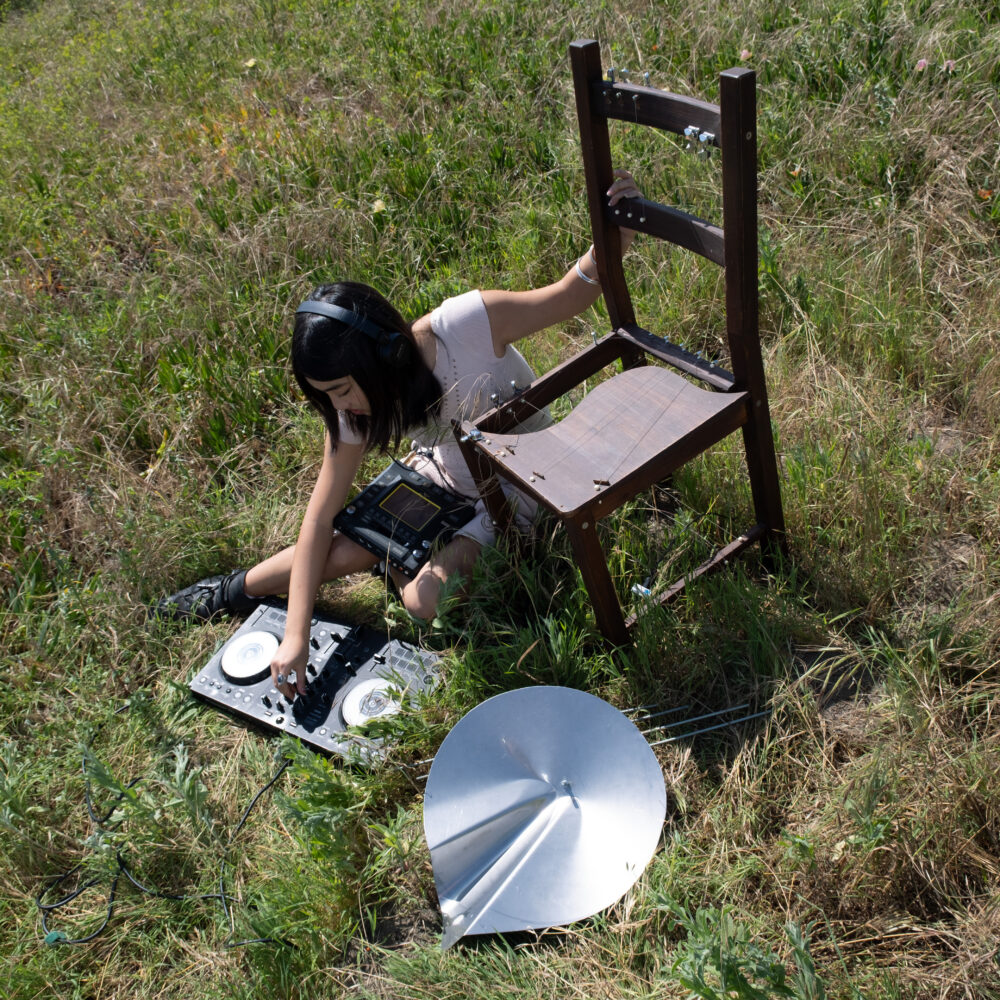
SOUND AS MATERIAL: ON MEDIUMS OF INVISIBLE TRUST — SOPHIE FAN IN CONVERSATION WITH gum.mp3 & DOR WAND
By: Sophie Fan (BA, UCLA 2026), dublab 2025-2026 Archive & Curatorial Intern. “Sound as Material” is Sophie’s internship capstone project. Tune in to her radio residency Intertidal on dublab.
Thank you to LA County Arts Internship Program for their ongoing partnership that provides college students opportunities to gain work experience with Los Angeles nonprofits.
Sound is invisible. It is not a drawing marked by painted lines, nor a sculpture carved by hands and steel. It is not a photograph fixed by light’s framing of an elusive reality. And yet, sound is physical.
I found myself tensely woven between invisibility and materiality quickly when I began trying to combine sound with visual and spatial mediums. Working as a sound artist over the last couple years, I began unraveling this knot by making sound sculptures as instruments, graphic notation as paintings, and photographs mapped by sonic location. The thread I discovered–sometimes through struggle, others through surprise–is that sound, too, is a medium: its physicality revealed by where it meets our bodies, its artistry dependent on attention and trust, its vulnerability asking for a listener’s willingness to surrender.
If sound is a medium, then someone must hold it, shape it, translate it.
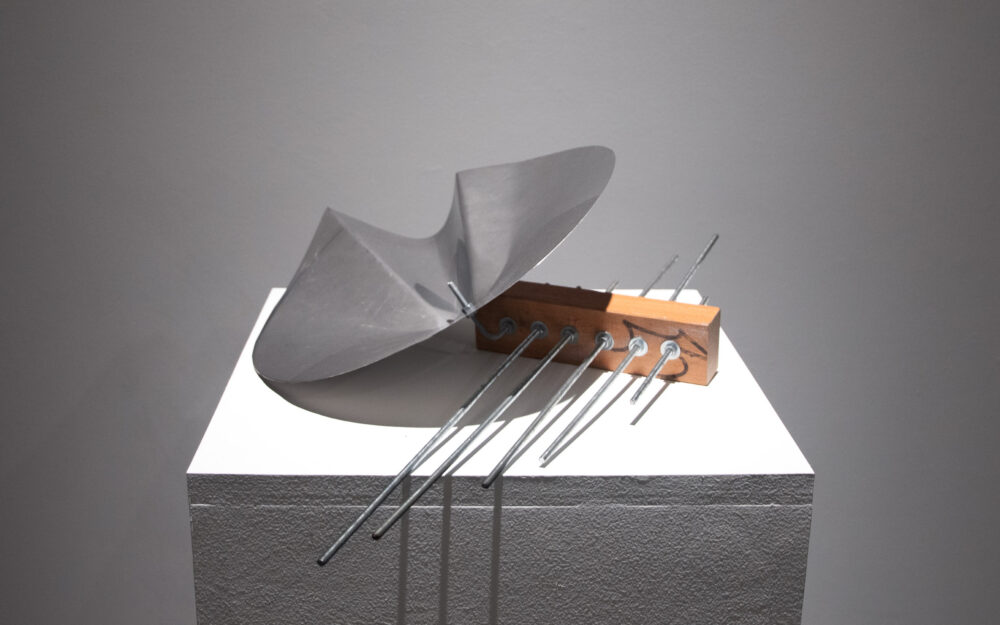
Sophie Fan, Minusculophone Aprés-Baschet, 2024.
To hold it, I built the Minusculophone Aprés-Baschet, a percussive metal sculpture. Designed by Dr. Martí Ruiz, a sound artist specializing in Cristal Baschet sound sculptures–featured on dublab’s own Out There ~ a field recording program by Metabolic Sonics from the Metabolic Studio. Together at the University of Barcelona, I learned to build a structure dedicated to capturing sound in an activated physical form.
Soon after its creation, I realized that this sculpture resided on an ambiguous boundary between sound and music. I created the Guitar Chair, a sculpture that retained similar properties to a musical instrument: able to be tuned, pitched, and strummed—learning to define this spectrum from sound to music was the ultimate definition I aimed to shape.
When I arrived at dublab as the Archival and Curatorial Intern, I came with an interest in expanding my understanding of sound—through music, art, and whatever that might mean within its walls. I left with something quieter but more foundational: an understanding of sound not as something to be presented, but something to be held and shared. I decided to explore this discovery through connecting with other dublab residents whose work sits at the intersection of physical, embodied, and sonic material.
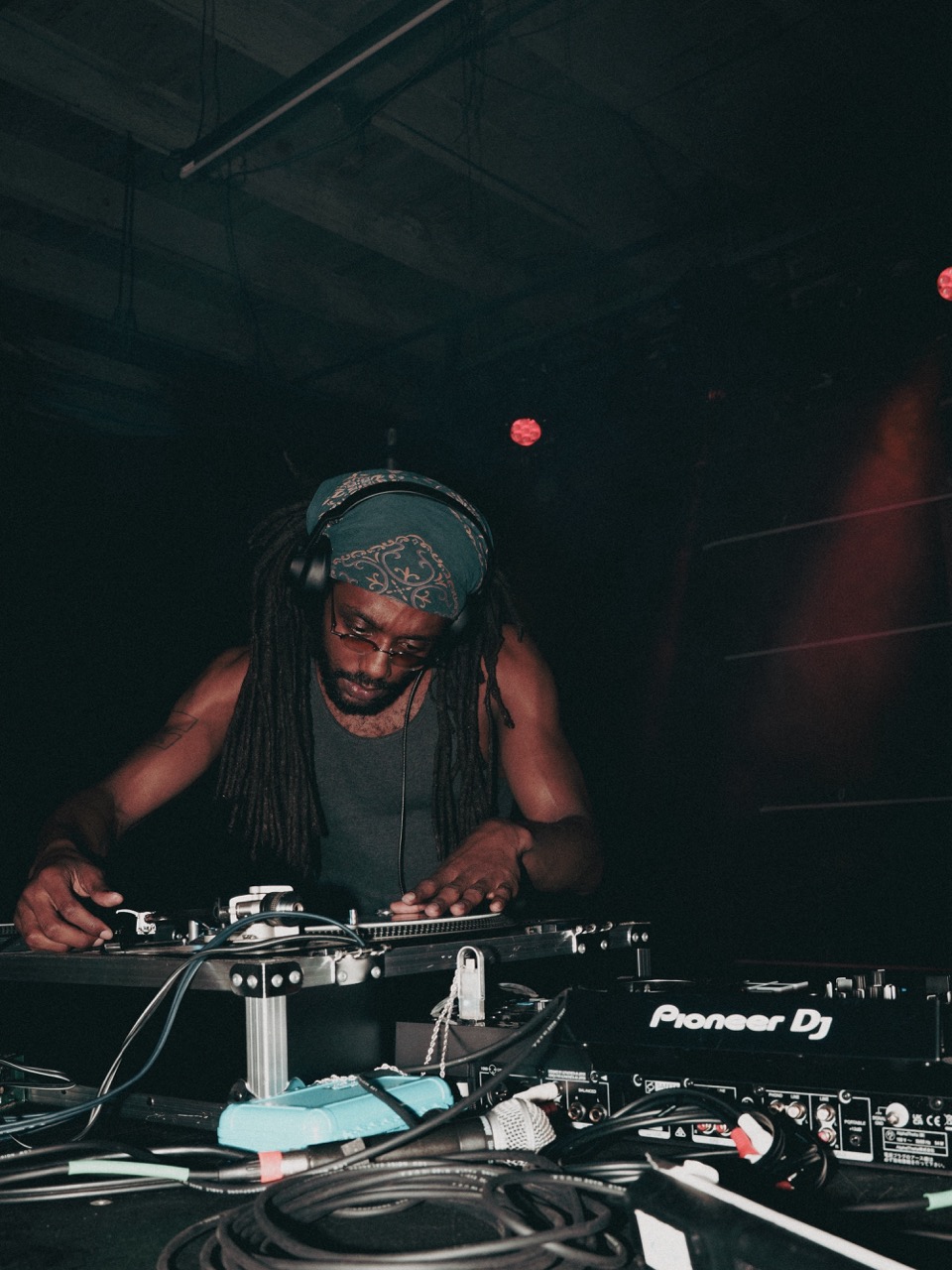
gum.mp3, Black Audio Society
As the creator of the dublab radio show, Black Audio Society, gum.mp3 curates and archives for the conservation and enjoyment of Black music. As an educator, the show’s premise began by using a syllabus with structured readings, artwork, and concepts that tie to each episode’s thematic soundtrack. He approaches DJ-ing as a practice that shapes a communal and spiritual space, grounded in the audience’s trust between his creative storytelling and live broadcast shows.
Sophie Fan: Why do you love music?
gum.mp3: I love music because it does something to my body that I can’t explain. Music has changed my life in a way that I never expected it to.
I think there’s something ancient about music that I’ve learned to really appreciate. It’s the same way I feel about drawing too, man. It’s why I love graffiti so much. Drawing is one of the oldest human practices, one of the oldest and first things we ever did as a species.
And it’s the same with producing sound, you know, and being able to artfully construct sound. I mean, language is still a manipulation of sound, you know? To me, that still is in the realm of music.
. . . So in that way, it’s easy for me to feel this kind of spiritual relationship to music because it’s ancient. . . . It’s such an old, charged, and somatically complex experience and activity. And that’s never lost on me with music. That’s why it feels like something bigger. It feels huge.
Stills: Swami Sound & gum.mp3, Second Time Around (feat. kamaal) [Music Video], 2026
Drawing and language are ancient human practices that rely on humans as a mediator for them to pass through. This flow of translation felt reminiscent of my graphic notation paintings, created based on calculated parabolic openings and loose strokes and shapes–eminating sound’s bound structures and free ambiguity. In my solo exhibition at the UCLA Little Gallery, If I Tell You, Will You Listen?, I assembled 13 collaborators to sonically interpret my painting. Through common instruments like guitar and keyboard to modular synths and kitchenware, this collection of interpretations became sonic translations from art into music.
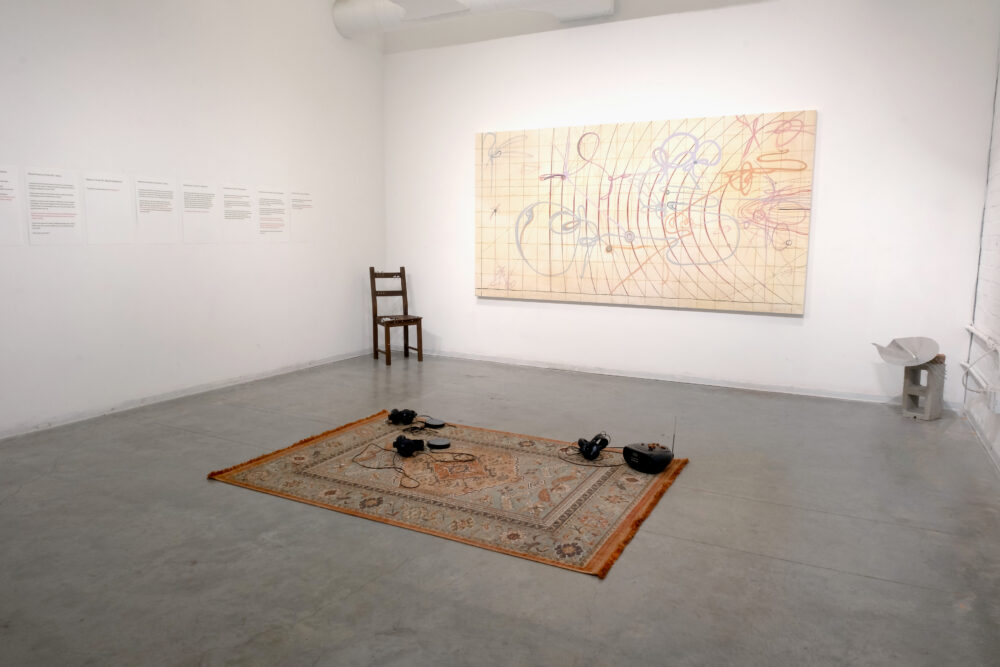
Installation view of Sophie Fan’s “If I Tell You, Will You Listen?” 2025
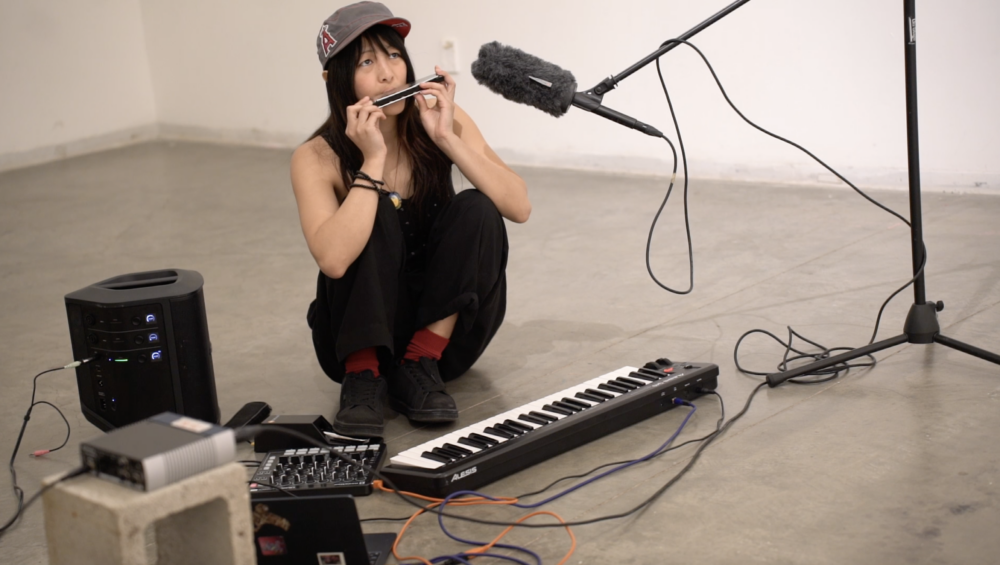
Tara He’s sonic interpretation on harmonica and synth.
Language is like a story through sound and music is like a drawing through sound. Musicians translate sonic material and DJs mediate the language of music. I wondered that if sound as a medium needs people to hold, shape, and translate, maybe it’s a component for storytelling that moves beyond listening and seeing.
SF: You’re creating this tangible collective place for your audience, guiding us through a narrative. How does your show (as a syllabus, live experience, and an archive) function as a way to tell a story, preserve the past, and imagine a future?
gum.mp3: So [Black Audio Society] became this kind of multimedia project in that way. So it’s using the idea of a syllabus to guide your thinking and to guide your experience with the mix. I had some successes and some failures, but it was interesting to try to tie the radio show to a real-life space. And I was grateful to The Pocket for letting me do it. It’s like a small 80-person room out in DC, but the sound is great.
And the people that showed up were really enthused about this idea of a more intentional music experience in an intimate space. So that was awesome. And then it’s evolved even more so now this year and last year, as I’ve been here in Baltimore, again, more intertwined with my community.
The incorporation of syllabus and space into gum.mp3’s radio show created structural parameters around music, whereas sound came into my practice as a product from experimentation with other mediums.
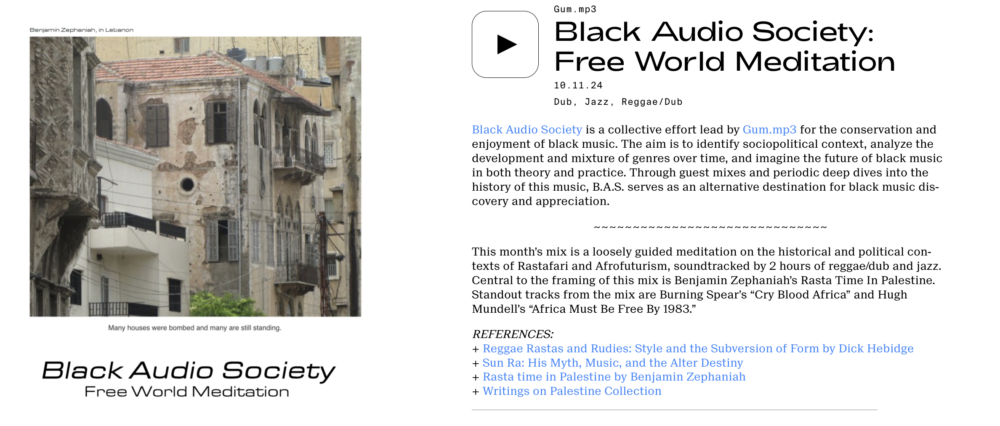
Show archive of gum.mp3’s “Black Audio Society: Free World Meditation” with readings on Palestine and liberation through arts & culture.
Similarly, dublab resident DJ Dor Wand’s interest in non-verbal forms of communication outside his own sonic production led him to fuse scent into practice. While their processes involve a certain level of storytelling–both through visible and sensory materials, we’re all motivated by the affective resonance of our work within different networks of people.
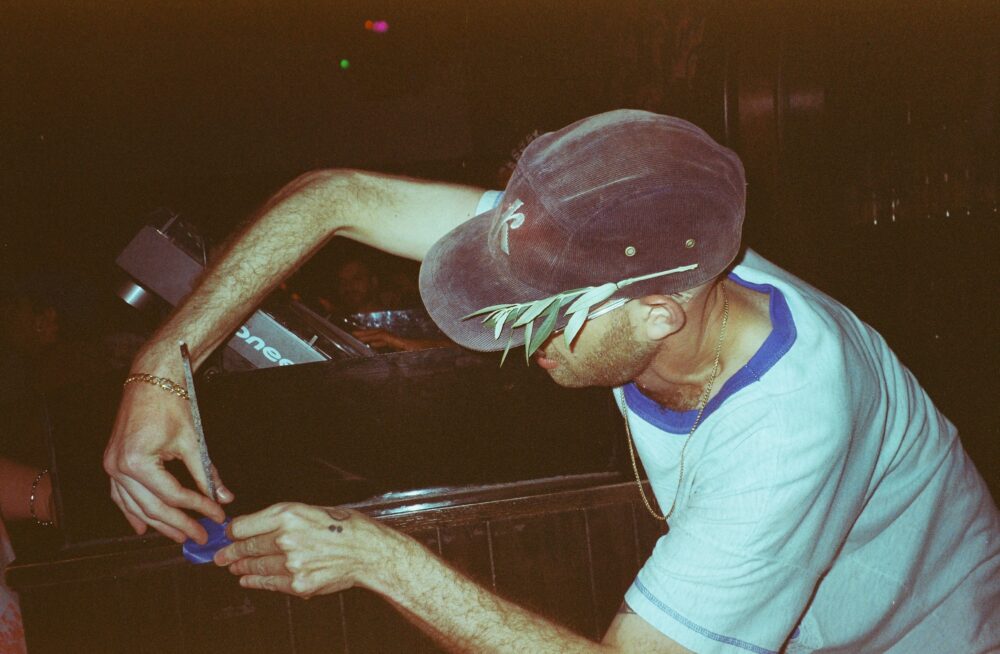
Dor Wand, Open Heart Social Club
A multidisciplinary artist, DJ, and musician, Dor Wand is the host of dublab’s Open Heart Social Club. Using the tools of ambient music, his practice expands to explore how sound, scent, and community can dynamically inhabit and create space. As a perfumer, Dor’s olfactory practice is integral to his art as a DJ and designer–creating incense holders and unique perfume blends. Using scent as a container of atmosphere, he elevates dancefloors by creating immersive environments.
SF: You describe yourself as an explorer at the intersection of sound and scent. I’m curious about what draws you to sensory inspiration beyond vision, and how sound and scent influence your artistry separately or together.
Dor Wand: I was looking for non-verbal ways to express myself, which led me to build a small ambient setup—harps, chimes, pedals—creating soundscapes to soften the heart and emotionally deactivate . . . That started around the time I began Open Heart Social Club. I take pride in being open-hearted, and the show reflects that.
I began exploring scent as another medium, which works on different parts of the brain. I started making perfume and incense to scent spaces. Just as sound and light define space, scent does too, and it’s underrated. Going out dancing—something sacred to me—I began experimenting with scenting parties by lighting incense and learning to work with smoke as a carrier.
It’s like DJing incense, reading the room and knowing when to shift the vibe. It became another medium for experimentation.
SF: I’m curious about how your approach differs when you’re DJing versus creating a song, album, or installation. Are you thinking about the spaces they’ll inhabit?
Dor Wand: They’re two separate things. As a DJ, I have more range and don’t lean into one genre. I go by feel and let the music do the work. My sound is softer and playful, and I only play music that hits the spot for me. My show is diverse but cohesive.
Live performance serves a specific purpose—ambient music needs the right setting. I’m starting a project called Beacon of Light with Tottie, current dublab resident DJ, focused on reviving chill-out rooms in nightlife. It’s about reintroducing softer spaces, educating people on their importance and history, and creating room for a wider range of music.
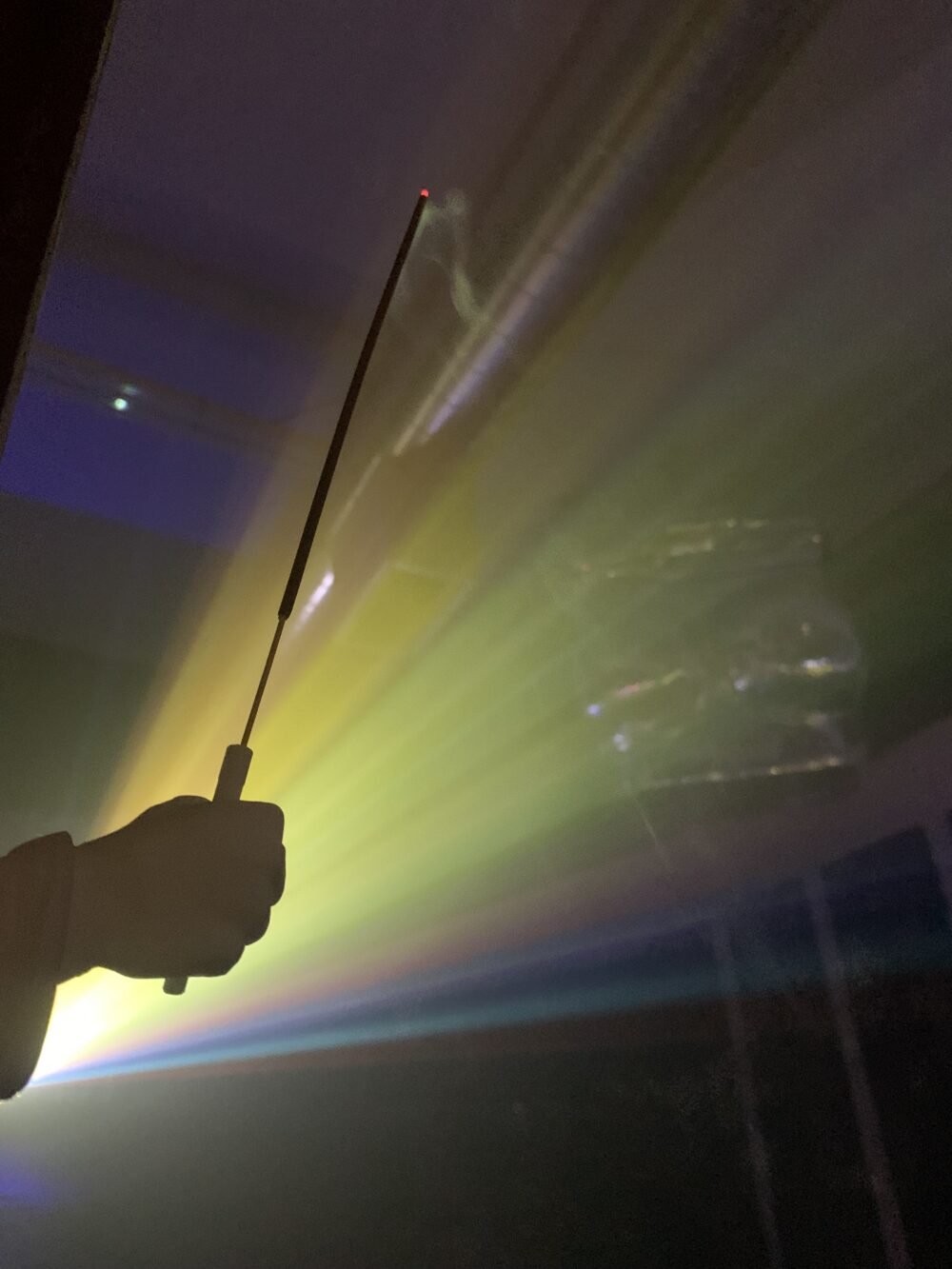
Dor Wand scenting room with incense
What became clear from both gum.mp3 and Dor, is that sound becomes a collective place not because it gathers people automatically, but because it requires commitment. As gum notes, people are often resistant to relinquishing control, especially in shared spaces like dance floors. Yet it is precisely this surrender that transforms sound into ritual–listening into participation. dublab is a place that garners a collective of people ready to experiment and surrender themselves t o both their own and others’ sonic journeys.
SF: Creating sonic spaces requires a lot of trust in others and in your art. It’s so different than, say, this is my sculpture and you have to accept it because it physically exists here in front of you. But with sound, the trust is being with me and listening with me. How does trust show up in your practice?
gum.mp3: You know, to trust me and let me do that . . . it’s kind of a ritualistic space that I put out; one that I appreciate and that I feel lucky to have experienced. It can be kind of elusive, that feeling. Sometimes you have such an intense reaction to art or to music and to film that it really puts you in this kind of spiritual place. People aren’t used to relinquishing control in that way because they feel vulnerable, which I understand.
Dor: I’m deeply passionate about music—it’s magical to me, and I lean on it emotionally. Music brings people together and opens hearts and minds. Having relocated multiple times, I notice unfulfilled potential in new cities, and being of service is fulfilling for me.
After speaking with gum.mp3 and Dor Wand, I started thinking about how their practices reflected my own thought processes. gum.mp3 and I shared a similar experience having studied Studio Arts in college, and we seemed to share a similar framework shaped by conceptual art, philosophy, and how these registers are carried into sound and music. Dor’s background in ambient music led him to shaping sonic spaces through scent, ambiance, and site-specific music selections. Our interests converged on harnessing invisible sensory experiences to control an atmosphere and space as much as something visual.
Sound does not ask to be looked at. Unlike sculpture, which asserts its presence through form, sound only exists if someone stays with it. It unravels over time, dependent on attention, asking listeners to relinquish control and enter into something they cannot see. Allowing sound waves to not only permeate your ear drums but also absorb into every other part of your body is physically vulnerable. That vulnerability is not incidental to sound—it is part of its material, which often requires other people.
Community at dublab is not a label but a practice—built through repetition, care, and the willingness to listen alongside others. It shows up in small moments: catching a favorite song on air and looking around to see that someone else recognizes it too; DJs lingering between sets to talk about what they’ve been listening to lately; the studio filling unexpectedly with friends, show guests, and borrowed joy. These moments accumulate quietly, forming a shared space of trust, curiosity, and care.
As a sound artist, my work now feels less about producing objects and more about building conditions—spaces where sound can move through bodies, where listening becomes collective, and where vulnerability is not a risk, but the medium itself.
Tune into Sophie Fan’s show, Intertidal, from 4-6PM on 4th Mondays quarterly (Mar. 30, Jun. 22, Sep. 21, Dec. 21).
